Shared purchase SEO tools are gaining traction among businesses that want access to premium optimization software without paying the full subscription cost. Although this approach may appear cost-effective at first, it comes with a host of hidden issues that can ultimately undermine your marketing results. In this article, we’ll explore ten major drawbacks of relying on shared purchase SEO tools in 2026.

One of the most significant drawbacks of shared purchase SEO tools is that they are often not legal. Many of the paid SEO tools that are shared through these services require individual subscriptions, and sharing accounts is against their terms of service. This can lead to account suspension or even legal action in some cases. Additionally, using shared purchase SEO tools can result in a loss of subscription revenue for the premium SEO tool providers, which can lead to the discontinuation of the software or a decrease in the quality of service.
Another drawback of shared purchase SEO tools is that they can be unreliable. Because multiple users are sharing a single account, there is a risk that the account may become overused, leading to slower speeds, decreased functionality, or even account suspension. Additionally, the quality of the SEO tools may be compromised if the shared account is not properly maintained or updated. Finally, there is a risk that the shared account may be compromised, leading to the loss of sensitive data or the distribution of malware.
10 Drawbacks of Using Shared Purchase SEO Tools
Shared purchase SEO tools can be a cost-effective solution for small businesses with limited budgets. However, there are some drawbacks to using these tools that you should be aware of before making a purchase. In this section, we will discuss the top 10 drawbacks of shared purchase SEO tools.
1. Security Risks

When you participate in a group buy service for SEO tools, you share access with others, potentially exposing your data to unauthorized access and breaches. This sharing of credentials means that sensitive information about your search engine strategies, and results could be accessible to others without your consent. Such exposures not only jeopardize the confidentiality of your data but also increase the risk of data breaches. These breaches can result in significant setbacks to your SEO efforts by compromising the integrity and effectiveness of your campaigns. Thus, the decision to use shared SEO tools must be weighed against these potential security vulnerabilities.
2. Reduced Reliability
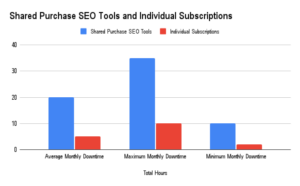
The nature of shared SEO tools, where resources are used by multiple users simultaneously, often leads to issues like tool downtime and inconsistent availability. This situation is particularly problematic when the tool becomes a bottleneck during peak usage times, which can be unpredictable. As a result, you might find yourself unable to access important features just when you need them most for urgent SEO tasks or analyses. Such unreliability can severely impact the efficiency and effectiveness of your SEO strategies, delaying improvements and potentially causing missed opportunities in optimizing your website’s search engine ranking.
3. Limited Access
4. Data Privacy Concerns

Sharing SEO tools through a group buy service can raise significant data privacy concerns. By granting access to these tools to multiple users, there is a risk that your sensitive SEO data, such as keyword strategies, analytics reports, and backlink information, could be accessed by others. If the shared tools lack robust security measures to strictly partition user data, there is a potential for accidental or intentional exposure of your proprietary information. This vulnerability not only threatens the security of your business’s data but also poses a risk of compromising competitive advantages in your SEO efforts. For more information on keeping your data secure, check out our Privacy Concern guide.
5. Performance Issues
When shared SEO tools are accessed simultaneously by multiple users, it can strain the system, leading to performance degradation. This overuse typically results in slower response times, delayed data processing, and, sometimes, outright tool crashes. For SEO professionals who depend on these tools for timely and accurate data to make critical decisions, such slowdowns can severely impact their ability to optimize effectively. The efficiency of routine tasks like tracking keyword rankings, analyzing website traffic, and auditing backlinks can be compromised, potentially hindering your SEO strategy’s overall success.
6. Lack of Support

One of the notable drawbacks of using shared purchase SEO tools is the often minimal or entirely absent customer support. Providers of these group buy services typically do not offer the same level of assistance you would expect from individual subscriptions, primarily due to the reduced cost structure. This lack of support can become a significant issue when you face technical problems or need specific guidance on how to best utilize the tools for your SEO needs. Without prompt and expert help, resolving issues can take longer, potentially stalling your SEO projects and impacting your site’s performance adversely.
7. Compliance Issues
Utilizing shared purchase SEO tools can often lead to violations of the terms of service (ToS) of the tool providers. Many SEO platforms specifically prohibit account sharing or the use of shared access in their usage policies. Engaging in such practices not only risks account suspension or termination but also may involve legal consequences. Compliance issues like these can disrupt your SEO activities, leading to setbacks in campaign progress and potentially damaging your reputation. It’s crucial to consider these risks, as non-compliance can severely impact your ability to effectively execute SEO strategies and maintain good standing with software providers.
8. Potential for Misuse
Sharing SEO tools within a group buy arrangement can significantly increase the risk of misuse, as you are effectively sharing sensitive tool access with users whose practices and ethical standards may not align with yours. There is a real possibility that other users could engage in spammy or unethical SEO practices, such as keyword stuffing or link schemes, which can negatively impact the overall credibility and effectiveness of the tool. Moreover, if these practices are detected by search engines, it could lead to penalties for your website, including drops in ranking or even blacklisting if your account is mistakenly associated with these activities. This risk underscores the importance of careful consideration when choosing to share access to SEO tools.
9. Dependency
Using shared purchase SEO tools introduces a significant level of dependency on third-party providers, which can pose risks to your SEO operations. If these providers experience downtime, technical issues, or even cease operations, it directly impacts your access to crucial SEO tools. This dependency can leave your SEO efforts vulnerable to disruptions that are outside your control. For businesses that rely heavily on continuous SEO monitoring and adjustments, such interruptions can result in missed opportunities, delays in response to market changes, and potential losses in search engine rankings. Thus, considering the stability and reliability of a provider becomes essential when opting for shared SEO tools.
10. No Customization
The lack of customization options in shared purchase SEO tools is a major limitation for users seeking to tailor features to their specific needs. Since these tools are designed to cater to a broad user base, individual customization options are typically restricted or nonexistent. This can be particularly challenging for businesses or SEO professionals who require specialized functionalities to effectively target their unique markets or optimize their strategies. Without the ability to adjust tool settings or features to precise specifications, you might find it difficult to achieve optimal results, potentially hindering your website’s SEO performance and growth.

In conclusion, shared purchase SEO tools might initially appear to be a budget-friendly option for small businesses and freelancers in 2026’s increasingly competitive digital landscape. However, the trade-offs in performance, data security, feature access, and reporting accuracy are significant. By thoughtfully weighing these disadvantages against the seemingly lower upfront costs, you can decide whether a group-buy setup genuinely supports your long-term SEO goals—or whether investing in your own fully licensed tools is ultimately the smarter, more sustainable choice for your business.